Where shoppers slip away between viewing and checkout.Illustration · Data Stories Lab
E-commerce & conversion
Fixing the Sales Leaks
Find where your online store loses buyers
Data Stories LabAnalyst reportOnline funnel · conversion
This analysis helps the e-commerce business owner see where the online store is losing customers and what is stopping them from buying. Many shoppers view products but don't add anything to their cart, and many who add items never finish checkout. By looking at every step of the customer journey, the analysis identifies the biggest drop-off points and what needs to be improved on the website, whether it's the product page, the add-to-cart step, or the checkout flow.
It also shows which marketing channels bring customers who actually buy, not just browse. This helps the e-commerce business owner decide where to invest marketing budget, which campaigns or experiments to continue, and which customer groups (like mobile users or email subscribers) to focus on. The goal is simple: provide clear insights that help increase sales and reduce wasted effort.
The numbers
View→cart
first leak
Cart→checkout
second leak
Email
best buyers
Mobile
higher conversion
“The results show where an e-commerce business owner should focus to get the best return.”
What the data shows
1. Where are customers dropping off?
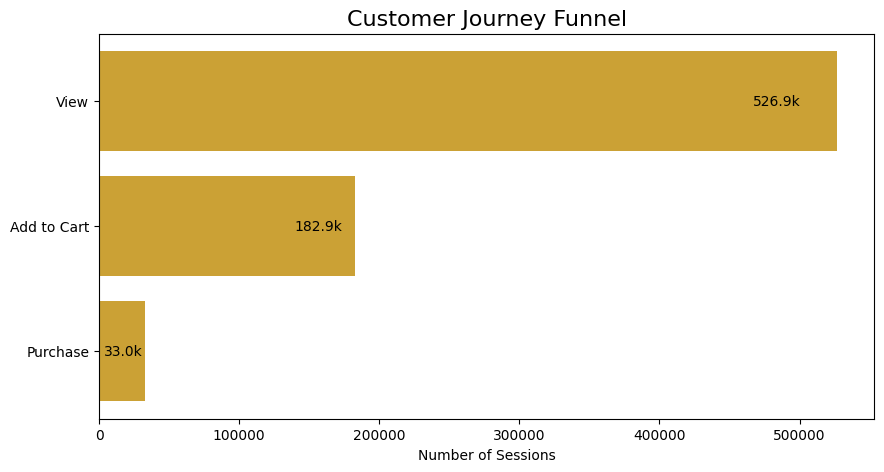
Most customers stop at two major points: moving from viewing a product to adding it to their cart, and moving from cart to checkout. This shows that shoppers are interested but not fully convinced, and many who start the buying process don't finish it.
For the e-commerce business owner, the priority is to make product pages more persuasive and the checkout flow smoother so fewer customers abandon their purchase.
2. Which pages or steps cause hesitation?
Customers often spend time on product pages without taking action, or browse for a long time without adding anything to their cart. This usually means they are unsure, something is unclear, missing, or not convincing enough.
Improving product descriptions, photos, reviews, and navigation can help customers feel more confident and reduce hesitation, turning more browsers into buyers.
3. Which marketing channels bring buyers?
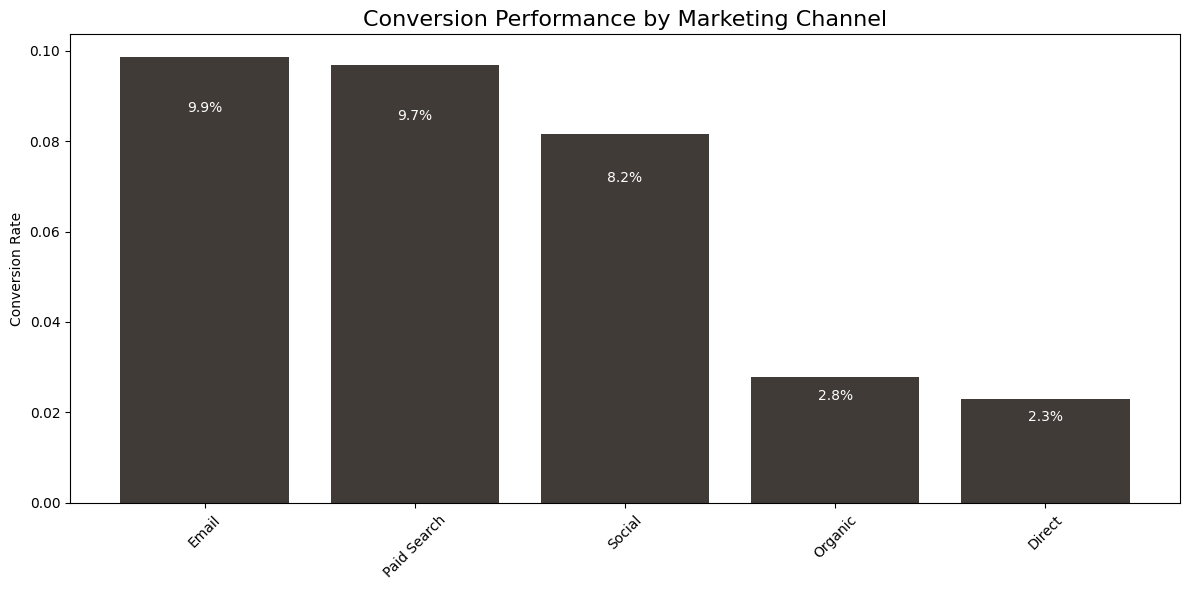
Email and Paid Search bring the highest-intent customers, with the strongest purchase rates. Social performs reasonably well, while Organic and Direct traffic convert much lower.
For the business owner, this means marketing budget should lean toward Email and Paid Search, while Organic and Direct need better content or targeting before being scaled.
4. Do mobile or desktop users buy more?
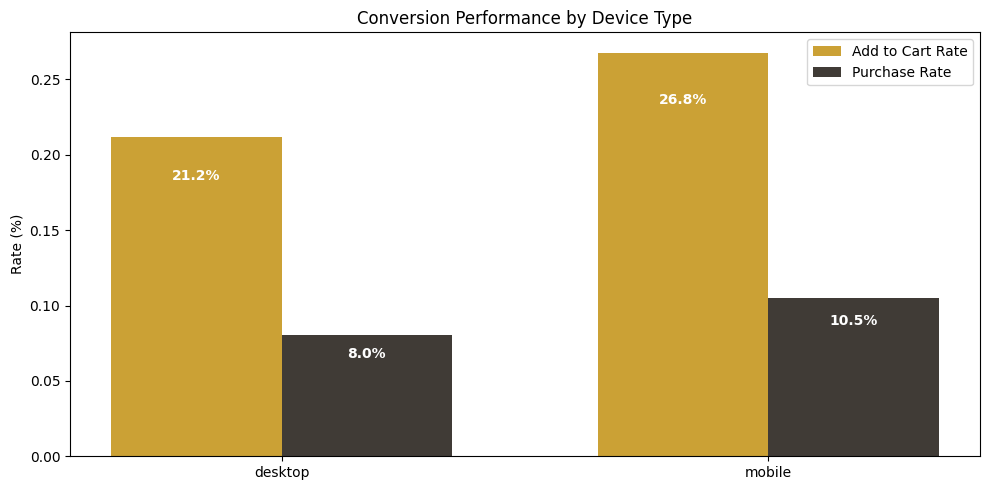
Mobile users convert better than desktop users in both adding to cart and completing purchases. This shows that mobile customers are not just browsing, they are willing to buy.
The business owner should continue strengthening the mobile experience, as it offers the biggest return, while improving desktop to reduce friction for those users.
5. Should Variant A continue?
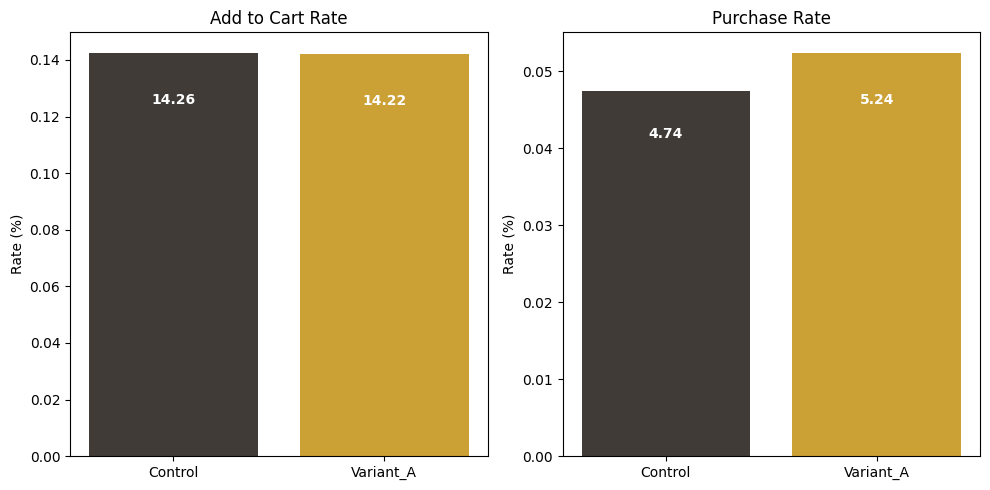
Variant A doesn't increase add-to-cart actions but does lead to slightly more completed purchases than the Control version. This suggests customers may feel more confident finishing their order with Variant A.
The business owner should continue testing Variant A, especially around checkout improvements, to understand how to increase this positive lift.
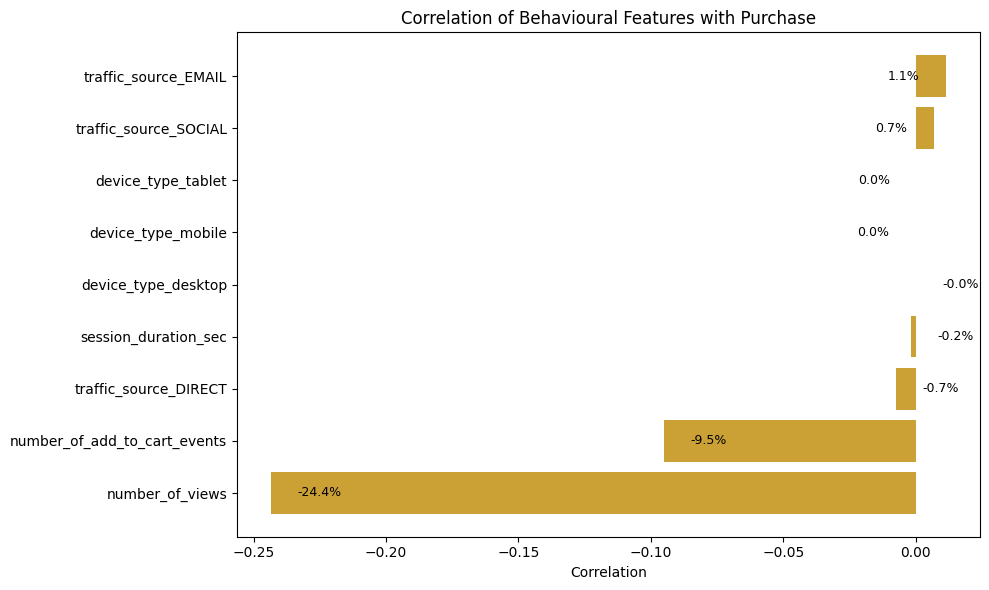
6. Which behaviours lead to purchases?
Customers coming from high-intent channels, especially Email, are most likely to buy. Surprisingly, viewing many products or adding many items to cart decreases the chance of completing a purchase, suggesting customers feel overwhelmed or stuck.
This means the business owner should guide customers more clearly with better recommendations, simpler choices, and stronger product clarity, while investing more in nurturing email-driven traffic.
Method & data
This analysis is based on over 500,000 shopping sessions, covering everything customers do on the website, from viewing a product to completing a purchase. The data includes product views, add-to-cart actions, time spent on pages, marketing channels, device types, and experiment groups. The aim is to understand how customers move through the store and where they drop off.
To give the e-commerce business owner practical answers, we looked at how the funnel performs, where customers hesitate, which channels bring real buyers, how mobile and desktop users behave, how Variant A compares to the Control group, and which behaviours most strongly lead to a purchase. The goal is simple: highlight where customers are being lost and show which improvements will make the biggest difference to sales.
Conclusion
The results show where an e-commerce business owner should focus to get the best return. Email and Paid Search bring the most customers who actually buy, while Social works fairly well. Organic and Direct traffic convert poorly and should only be scaled after fixing content or landing page issues. Variant A shows slightly better purchase rates than the Control version, so it is worth continuing and testing further, especially around the checkout process.
On the website, the biggest problems happen on product pages and during checkout. Many customers view products but don't add anything to their cart, which means PDPs need clearer information, stronger value messages, and a more convincing layout. The next major drop-off happens at checkout, so reducing friction and building trust here will quickly improve sales. Mobile users and email-driven customers convert the best, so they should be top priority for optimisation and marketing efforts.